
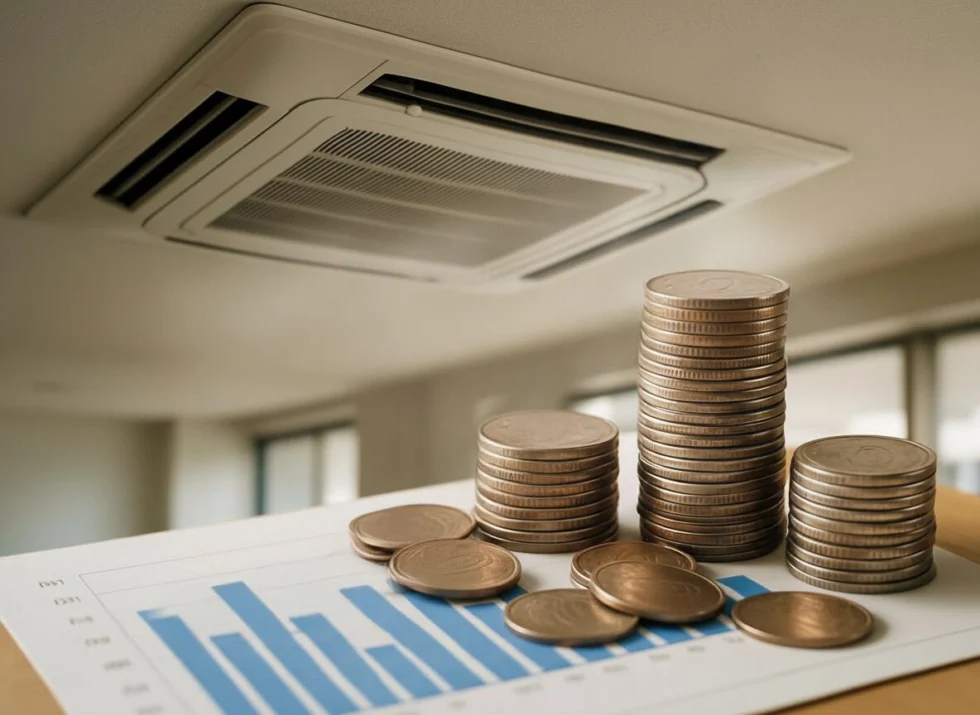
“Commercial air conditioner electricity costs are too high in Hamamatsu,” “We can’t stop the air conditioning, so utility bills are a constant burden every month”—
This article is designed for business owners in Hamamatsu, including those operating stores, offices, factories, restaurants, and salons, who face these concerns. It provides practical strategies for smartly reducing electricity costs associated with commercial air conditioners.
By the time you finish reading, you will have a clear understanding of “why your electricity costs are high,” “what energy-saving measures you can implement immediately,” and “how much you can reduce costs by replacing equipment or utilizing subsidies.”
First, this article organizes the main reasons why electricity costs for commercial air conditioners become high, taking into account Hamamatsu’s climate, building conditions, operating hours, and air conditioning load.
It then explains, in a practical and easy-to-understand manner, operational improvements that can be implemented with little to no initial cost—such as adjusting temperature settings, managing timers and on/off schedules, cleaning filters, and improving the environment around outdoor units.
You will see how even small improvements in daily maintenance can enhance air conditioning efficiency and reduce unnecessary energy consumption.
Furthermore, as a fundamental solution to reducing electricity costs, we explain the benefits of upgrading to the latest energy-efficient commercial air conditioners and high-efficiency inverter systems.
By comparing the running costs of continuing to use older units with the cost savings achieved after replacement—along with real examples from Hamamatsu—you will gain a clear understanding of “when to replace your system” and “which capacity and model to choose.”
We also discuss the importance of professional HVAC design and equipment selection, helping you understand how to approach system upgrades without failure.
In addition, this article explains the basic structure, application process, and key considerations of national and local government subsidies and grant programs related to energy efficiency that are accessible to businesses in Hamamatsu.
This will help you grasp the overall concept that “by effectively utilizing subsidies, you can invest in energy-saving equipment while reducing the initial financial burden.”
We also highlight the importance of choosing local specialists in Hamamatsu who understand regional conditions and building usage, as well as the significance of ongoing maintenance and after-sales support for sustaining long-term reductions in electricity costs.
Reducing electricity costs for commercial air conditioners can be effectively achieved by combining multiple approaches: “operational optimization,” “thorough maintenance,” “planned upgrades to energy-efficient equipment,” “utilization of subsidies,” and “collaboration with reliable professional contractors.”
Through this article, we hope you will not only learn simple energy-saving techniques but also gain a comprehensive understanding of realistic and practical cost-reduction strategies for businesses in Hamamatsu—and use it as an opportunity to reassess your air conditioning environment.

Based in Hamamatsu, we specialize in the design, installation, and maintenance of commercial air conditioning, HVAC, and pump systems.
With over 30 years of proven experience and technical expertise, we help create comfortable environments.
Trusted by many publicly listed companies, we take pride in our reliability and responsive service.
We also operate a branch in Malaysia, expanding our reach globally.
Learn more about our company
Contents
- 1. Thorough Analysis of Why Commercial Air Conditioner Electricity Costs Are High in Hamamatsu
- 2. Electricity Cost Reduction Techniques You Can Start Today
- 3. Fundamental Solutions to Reduce Electricity Costs of Commercial Air Conditioners
- 4. Energy-Saving Subsidies for Commercial Air Conditioners Available in Hamamatsu
- 5. The Importance of Choosing a Reliable Local Specialist
- 6. Summary
1. Thorough Analysis of Why Commercial Air Conditioner Electricity Costs Are High in Hamamatsu
When operating stores, offices, or factories in Hamamatsu, many business owners feel that “our air conditioning electricity costs might be higher than similar businesses in other areas.”
In reality, there are many cases where electricity costs increase more than expected due to the combination of Hamamatsu’s climate characteristics, building conditions, and the performance and operation of commercial air conditioners.
Here, we systematically organize the main causes of rising electricity costs for commercial air conditioners, taking into account factors unique to the Hamamatsu area.
By comparing this information with your own situation, you will be able to clearly identify “where improvements should begin.”
1.1 Why Electricity Costs Increase in Your Facility
The power consumption of commercial air conditioners is not determined solely by “the performance of the unit itself.”
Climate conditions, building performance, usage patterns, and power contracts are intricately intertwined, significantly impacting total electricity costs.
1.1.1 Hamamatsu’s Unique Climate Increases Cooling Load
Hamamatsu experiences high temperatures and humidity in summer, and also has a certain level of heating demand in winter.
According to long-term data published by the Japan Meteorological Agency, the western Shizuoka region has relatively many midsummer days and tends to have high humidity (reference: JMA “Past Weather Data Search”).
In such an environment:
- Strong daytime sunlight and western sun exposure increase indoor temperatures
- High humidity raises perceived temperature, leading to lower cooling setpoints
- Heat generated in restaurants and factories (kitchen equipment, production machinery, human activity)
These factors combine to create a situation where cooling loads increase, compressors operate at full capacity for longer periods, and electricity consumption (kWh) rises easily.
1.1.2 Building and Facility Conditions Affect Air Conditioner Efficiency
Even with the same air conditioner, the required cooling and heating load varies greatly depending on building structure and equipment.
Especially in roadside stores and suburban factories in Hamamatsu:
- Glass-front stores with large windows exposed to strong western sunlight
- Older steel-frame or prefabricated offices with insufficient insulation
- Warehouses and factories with high ceilings and large spatial volumes
- Logistics facilities with frequent opening and closing of shutters and entrances
These conditions often result in heat easily escaping from indoors while outside heat or cold air enters, causing air conditioners to operate near maximum capacity continuously and leading to persistently high electricity costs.
| Building/Facility Condition | Common Issue | Impact on Electricity Costs |
|---|---|---|
| Stores with large glass surfaces and strong western sunlight | Indoor temperature rises rapidly due to solar radiation, making cooling insufficient | Longer full-capacity cooling operation increases peak demand and total consumption |
| Poorly insulated steel or prefab offices | Heat accumulates in summer and escapes quickly in winter | Longer HVAC operation increases annual air conditioning costs |
| Warehouses/factories with high ceilings | Warm air accumulates at the top, making lower areas hard to heat | Frequent adjustment of temperature settings increases heating power consumption |
| Frequent opening/closing of shutters and entrances | Outdoor air inflow destabilizes indoor temperature | Frequent on/off cycling and capacity changes reduce efficiency |
1.1.3 Impact of Power Contracts and Pricing Plans
When considering electricity costs for commercial air conditioners, one often overlooked factor is the balance between “basic charges” and “usage charges” determined by the power contract and demand (contracted capacity).
In many businesses:
- High simultaneous usage increases contracted demand
- Outdated high-voltage or low-voltage plans are not optimized
- Load is concentrated during peak daytime hours (around 1 PM–4 PM)
These situations often lead to unnecessarily high basic charges or inflated total electricity costs due to lack of peak demand management.
As shown in materials published by the Agency for Natural Resources and Energy (e.g., Overview of Electricity Pricing Systems), business electricity rates are significantly influenced not only by usage but also by contracted demand.
Therefore, optimizing the power contract itself, along with reviewing equipment capacity, number of units, and operating schedules, is essential.
1.2 Risks and Costs of Continuing to Use Older Units
In Hamamatsu, it is not uncommon to find commercial air conditioners that have been in operation for over 10 years.
While it may seem wasteful to replace units that are still functioning, continuing to use older equipment often means paying hidden costs such as higher electricity bills, increased failure risk, and reduced comfort.
1.2.1 Efficiency Decline and Aging Deterioration
Commercial air conditioners have improved in energy efficiency over time, with higher APF (Annual Performance Factor) and COP (Coefficient of Performance).
According to energy efficiency catalogs published by the Ministry of Economy, Trade and Industry (e.g., Energy Efficiency Information for Commercial Equipment), there are clear differences between old and new models.
In real-world conditions:
- Contamination and corrosion of heat exchanger fins
- Slight refrigerant leakage or incorrect charge levels
- Wear and tear of compressors and fan motors
These aging factors reduce actual efficiency below catalog specifications.
As a result, maintaining the same comfort level requires more electricity than newer models, and over time, the difference in electricity costs alone can offset the cost of replacing the unit.
| Equipment Age | Typical Characteristics | Impact on Electricity Costs |
|---|---|---|
| Older than 10 years | Less strict energy standards and advanced deterioration | Significantly higher energy consumption compared to modern units |
| 5–10 years old | Equipped with inverters but less efficient than latest models | Costs can be managed, but replacement offers further savings |
| Latest energy-efficient models | High-efficiency inverters and advanced control systems | Significant reduction in annual electricity costs under same conditions |
1.2.2 Losses from Non-Inverter Systems
Many older commercial air conditioners are non-inverter systems that cannot control compressor speed.
These systems:
- Operate at full power until reaching the set temperature
- Stop once the temperature is reached
- Restart at full power when temperature changes again
This on/off cycle causes high startup current and unnecessary peak demand and energy consumption.
In contrast, inverter systems:
- Adjust output as they approach the set temperature
- Reduce abrupt on/off cycling
- Maintain stable indoor temperatures and comfort
As a result, there is often a clear difference in annual electricity costs under the same usage conditions.
1.2.3 Hidden Costs: Failures, Repairs, and Opportunity Loss
Continuing to use old equipment increases not only electricity costs but also risks such as:
- Sudden breakdowns during peak summer seasons disrupting business operations
- Difficulty obtaining parts or refrigerant for outdated systems
- Repeated repairs leading to high cumulative costs
For businesses like restaurants, salons, and retail stores in Hamamatsu, where comfort directly affects sales and customer satisfaction, these risks can be critical.
While it may seem economical to keep using old units:
- Total repair costs and downtime over recent years
- Electricity cost differences between old and new models
- Actual installation costs after subsidies and tax benefits
When considered together, it is often more cost-effective to replace aging units proactively rather than waiting for failure.
Thus, high electricity costs for commercial air conditioners in Hamamatsu are influenced by a combination of regional climate conditions, building characteristics, and the declining efficiency and risks associated with older equipment.
In the next section, we will explain practical methods you can start today to reduce electricity costs.
2. Electricity Cost Reduction Techniques You Can Start Today
To reduce electricity costs for commercial air conditioners in offices, stores, and factories in Hamamatsu, it is important to first focus on “operational improvements that can be made with existing equipment”.
Here, we explain practical methods that can be implemented immediately without specialized construction or large investments, organized from three perspectives: operation, maintenance, and installation environment.
2.1 Reviewing Temperature Settings and Proper Operation
The most influential factors in reducing electricity costs for commercial air conditioners are “temperature settings” and “how the system is operated”.
The Ministry of the Environment recommends a cooling temperature of 28°C for offices (source: MOE COOL CHOICE), and even a 1°C adjustment can change electricity consumption by several percent.
2.1.1 Relationship Between Temperature Settings and Electricity Costs
In general, commercial air conditioners consume more power as the difference between outdoor temperature and the set temperature increases.
Therefore, optimizing temperature settings is especially important in regions like Hamamatsu, where summer temperatures are high.
| Operation Mode | Recommended Temperature | Energy-Saving Tips |
|---|---|---|
| Cooling (Summer) | Around 26–28°C | Minimize the difference from outdoor temperature and set airflow to “high” or “auto” to lower perceived temperature. |
| Heating (Winter) | Around 20–22°C | Focus on warming the lower area and use a circulator to distribute air, avoiding excessively high settings. |
Because Hamamatsu experiences both hot, humid summers and cold winters, usage time for both cooling and heating tends to be long.
For this reason, “regularly adjusting temperature settings according to season, time of day, and occupancy” forms the foundation of electricity cost reduction.
2.1.2 Prioritize Continuous Operation Over Frequent On/Off
Some people believe that frequently turning the air conditioner off during short breaks reduces electricity costs.
However, since commercial air conditioners consume a large amount of power during startup, frequent on/off cycles within short periods may actually increase electricity costs.
As a general guideline, for breaks of less than 30 minutes, it is often more efficient to adjust temperature or airflow rather than turning the system off. In offices or stores where staff movement is predictable, setting operation patterns by time of day can improve efficiency.
2.1.3 Utilizing Zoning and Timer Functions
If areas with many occupants and areas with few occupants coexist within the same floor, cooling or heating all areas at the same temperature and time leads to significant energy waste.
The following practices can reduce unnecessary power consumption:
- Group multiple indoor units by zone and vary operation times by area.
- Use timers or centralized controllers to automate startup before opening and shutdown after closing.
- Control meeting rooms or reception areas separately so they operate only when in use.
In offices near Hamamatsu Station or roadside stores with defined business hours, settings such as “automatically turning on cooling 30 minutes before opening and slightly relaxing the temperature 30 minutes before closing” can reduce unnecessary operating time.
2.1.4 Improve Comfort to Allow Higher Temperature Settings
When adjusting temperature settings, controlling perceived temperature is essential to avoid complaints about discomfort.
The following methods are low-cost and can be implemented immediately:
- Use circulators or ceiling fans to evenly distribute air and prevent temperature imbalance.
- Use blinds, roller screens, or heat-shielding films to reduce heat gain from direct sunlight.
- Install vinyl curtains or airlocks at entrances with frequent door opening to prevent outside air intrusion.
These measures make it easier to maintain comfort even if the actual temperature setting is increased by 1–2°C, balancing cost reduction with comfort.
2.2 Thorough Filter Cleaning and Effective Maintenance
When dust and dirt accumulate in filters and heat exchangers, airflow decreases and heating/cooling efficiency drops significantly.
As a result, it takes longer to reach the set temperature, leading to extended full-power operation and higher electricity costs.
In Hamamatsu, where traffic volume is high and roadside stores and factories are exposed to dust and exhaust, frequent cleaning is especially important.
2.2.1 Recommended Filter Cleaning Frequency
Cleaning frequency depends on usage and environment, but general guidelines are as follows:
| Facility Type | Environment Example | Recommended Frequency |
|---|---|---|
| Office | Inside buildings, low dust | Once every 1–2 months |
| Roadside store | Near main roads, high traffic | Once every 2–4 weeks |
| Restaurant | Indoor units near kitchens | Once every 2 weeks (affected by oil smoke) |
| Factory/Warehouse | High levels of dust, debris, or particles | Once every 1–2 weeks or more frequently as needed |
These are guidelines; actual frequency should be adjusted based on visual inspection and changes in air conditioning performance.
2.2.2 Proper Filter Cleaning Procedure
Filter cleaning is simple, but incorrect methods may damage filters or allow water into the unit.
Basic procedure:
- Turn off the air conditioner and switch off the breaker for safety.
- Open the front panel according to the manual and carefully remove the filter.
- Use a vacuum or wash gently with water if washable.
- Avoid direct sunlight and fully dry before reinstalling.
Reinstalling while damp can cause mold and odors, worsening indoor conditions, so proper drying is essential.
2.2.3 Importance of Professional Maintenance
While filter cleaning can be handled in-house, cleaning internal components such as heat exchangers, drain pans, and fans requires specialized knowledge and cleaning agents.
Accumulated dirt leads to higher electricity costs and hygiene issues.
Therefore, annual professional maintenance including cleaning, gas pressure checks, and electrical inspections is recommended.
According to the Agency for Natural Resources and Energy, proper equipment maintenance is an effective energy-saving measure (source: Agency for Natural Resources and Energy).
In Hamamatsu, environmental factors such as sea breeze corrosion or dust and pollen buildup can accelerate equipment deterioration, making regular maintenance crucial for long-term cost reduction and equipment lifespan.
2.3 Improve Outdoor Unit Environment for Better Efficiency
When considering electricity cost reduction, attention often focuses on indoor units, but the outdoor unit environment is equally critical for efficiency.
Outdoor units release heat during cooling and absorb heat during heating, so poor surrounding air conditions reduce performance.
2.3.1 Ensure Proper Ventilation Around Outdoor Units
Obstructions around outdoor units cause airflow recirculation, leading to “repeated intake of hot air”.
This increases compressor load, raising electricity costs and failure risk.
Check the following:
- Sufficient space around the unit (typically several tens of centimeters to 1 meter).
- No obstruction of airflow by plants, signs, storage, ladders, or boxes.
- No accumulation of debris or leaves.
- Multiple units are not positioned too closely.
2.3.2 Prevent Direct Sunlight and Heat Buildup
Strong sunlight and heat reflection in Hamamatsu can increase surrounding temperatures.
Measures include:
- Installing shading without blocking airflow.
- Using reflective coatings or vegetation.
- Adjusting layout to avoid vehicle exhaust heat.
However, choosing covers based only on design may worsen airflow and reduce efficiency.
2.3.3 Regular Inspection and Cleaning of Outdoor Units
Outdoor units are exposed to dust, exhaust, salt, and pollutants.
Dirt on heat exchanger fins reduces efficiency, increasing electricity costs.
Regular checks:
- Inspect for debris or dirt several times a year.
- Consult professionals for cleaning.
- Check for tilt, vibration, or abnormal noise.
Energy-saving materials from government agencies also emphasize proper maintenance.
Improving outdoor unit conditions is a cost-effective measure that can be implemented immediately.
By combining operational improvements, maintenance, and environmental optimization, businesses in Hamamatsu can effectively reduce electricity costs using existing air conditioning systems.
3. Fundamental Solutions to Reduce Electricity Costs of Commercial Air Conditioners
3.1 Benefits of Replacing with the Latest Energy-Efficient Models
To fundamentally reduce electricity costs of existing commercial air conditioners in stores, offices, and factories in Hamamatsu, it is important not only to improve daily operations but also to plan a systematic upgrade (renewal) to the latest high energy-efficiency models.
In particular, air conditioners that have been in use for more than 10 years tend to consume significantly more electricity annually compared to newer models with the same capacity, resulting in continuously high running costs.
Energy-saving materials published by the Ministry of Economy, Trade and Industry and the Agency for Natural Resources and Energy also indicate that improving the efficiency of air conditioning equipment greatly contributes to energy savings in office buildings and stores (reference: Agency for Natural Resources and Energy official website).
To better understand the potential cost reduction benefits, it is helpful to check the following points in advance when considering replacement.
3.1.1 Guideline for Replacement Timing Based on Usage Years and Failure Risk
Generally, depending on the usage environment, around 10 years is considered a guideline for evaluating replacement.
Long-used equipment experiences deterioration of components such as compressors, heat exchangers, and fan motors, leading to reduced performance.
As a result, longer operation is required to maintain the set temperature, increasing electricity consumption.
In addition, aging equipment carries a higher risk of failure, and unexpected breakdowns during peak seasons may lead to decreased sales or production stoppages.
If repairs accumulate, the total cost of repair expenses + electricity costs + opportunity losses may exceed the cost of early replacement, making it important to evaluate from a lifecycle cost perspective.
3.1.2 Comparing Energy Efficiency of Latest Models (APF/COP)
When selecting the latest commercial air conditioners, you can objectively compare energy efficiency by checking the following indicators listed in catalogs and energy labels:
- “COP (Coefficient of Performance)” indicating energy efficiency relative to rated capacity
- “APF (Annual Performance Factor)” indicating average annual energy efficiency
Higher values indicate better efficiency and lower electricity consumption for the same cooling/heating capacity.
In regions like Hamamatsu with high cooling demand, selecting models with high cooling efficiency can significantly reduce annual electricity costs.
| Comparison Item | Older Models (e.g., non-inverter) | Latest Energy-Efficient Models (e.g., high-efficiency inverter) |
|---|---|---|
| Energy efficiency indicators | Tend to have lower APF and COP | Higher APF and COP with superior energy efficiency |
| Annual power consumption | Higher electricity usage even with the same capacity | Reduced power consumption while maintaining required performance |
| Failure and parts replacement risk | More frequent failures and higher repair costs | Lower failure risk within warranty period and easier maintenance planning |
| Comfort and functionality | Rough airflow control, leading to uneven temperatures | Precise airflow and automatic control reduce temperature unevenness |
As shown above, upgrading to the latest models is not just about “replacing equipment,” but an investment that simultaneously achieves reduced electricity costs, lower failure risk, and improved comfort.
3.2 High-Efficiency Inverter Air Conditioners Make a Big Difference
In areas like Hamamatsu, where summer temperatures are high and cooling loads are significant, choosing commercial air conditioners equipped with high-efficiency inverters directly leads to reduced electricity costs.
This is because inverter control allows precise adjustment of compressor speed and airflow, enabling operation that avoids unnecessary energy consumption.
3.2.1 Difference Between Inverter and Non-Inverter Systems
The main difference lies in how the compressor operates.
Non-inverter systems control output by repeatedly turning the compressor on and off, while inverter systems continuously adjust output by changing operating frequency.
| Item | Non-Inverter | Inverter |
|---|---|---|
| Control method | On/off control of compressor | Continuous control of compressor speed |
| Power consumption | High startup power, leading to inefficiency | Adjusts power according to demand, improving efficiency |
| Indoor environment | Large temperature fluctuations | Stable indoor conditions |
| Running cost | Higher costs during long operation | Greater savings with continuous operation |
For facilities that operate air conditioning continuously—such as restaurants, supermarkets, offices, and factories—the energy-saving benefits of inverter systems are especially significant.
3.2.2 Capacity Design and Unit Control Based on Hamamatsu Climate
When introducing inverter systems, it is important not only to select the latest models but also to design capacity based on Hamamatsu’s climate and building characteristics.
Oversized systems may reach target temperatures too quickly and operate inefficiently, while undersized systems may run continuously at full power, increasing electricity costs.
By utilizing multi-air conditioning systems and unit control functions, it is possible to adjust operation based on occupancy and usage areas.
3.2.3 Integration with Energy Management
When installing high-efficiency inverter systems, consider integration with energy management systems (EMS) or demand monitoring systems.
These systems optimize electricity usage by controlling output based on peak demand, preventing increases in basic charges.
Such approaches align with national energy-saving policies, and information from the Ministry of Economy, Trade and Industry and the Ministry of the Environment can be helpful.
3.3 Optimal Equipment Selection by Experts and Case Examples
To fundamentally reduce electricity costs, it is not enough to simply choose energy-efficient equipment; optimal system selection and proper design/installation based on building type and usage are essential.
Consulting local specialists familiar with Hamamatsu ensures appropriate capacity design and stable cost reduction results.
3.3.1 Key Points for Optimal Equipment Selection
Experts evaluate:
- Building usage (office, store, factory, healthcare facility, etc.)
- Floor area, ceiling height, insulation performance, window size and orientation
- Occupancy and traffic patterns
- Internal heat sources
- Existing equipment performance and energy costs
Based on these, a comprehensive design including layout, outdoor unit placement, and system balance maximizes efficiency.
3.3.2 Examples by Industry
| Industry | Common Issue | Improvement Approach |
|---|---|---|
| Restaurants | Heat from kitchens increases cooling load | Separate kitchen ventilation and seating air conditioning |
| Offices | Uneven temperature distribution | Zoning and optimized layout |
| Factories | Large spaces increase load | Targeted air conditioning and insulation improvements |
| Healthcare facilities | Continuous operation increases costs | Balance efficiency with comfort requirements |
3.3.3 Post-Installation Verification and Support
After installation, monitoring energy usage and continuously optimizing operation is essential.
With proper maintenance and operation, energy-saving performance can be sustained long-term, reducing air conditioning costs in Hamamatsu.
4. Energy-Saving Subsidies for Commercial Air Conditioners Available in Hamamatsu
When working to reduce electricity costs for commercial air conditioners in Hamamatsu, effectively combining energy-saving subsidies and grants provided by the national government, Shizuoka Prefecture, and Hamamatsu City is a highly effective way to upgrade to the latest high-efficiency air conditioners while significantly reducing initial costs.
Here, we outline the types of programs that are easy for businesses in Hamamatsu to consider, along with key points for application.
4.1 Utilizing Subsidy Programs from National and Local Governments
Subsidies available for replacing commercial air conditioners or implementing energy-saving upgrades are mainly divided into “national programs,” “Shizuoka Prefecture programs,” “Hamamatsu City programs,” and “others (industry groups, power companies, etc.)”.
Since the details and application periods change each fiscal year, it is important to check the latest information and choose the most advantageous combination for your business.
4.1.1 Main Types of Subsidies Available to Businesses in Hamamatsu
Subsidies and support programs that are easy for businesses in Hamamatsu to utilize for upgrading commercial air conditioners can be broadly categorized as follows:
| Program Provider | Overview | Suitable Cases |
|---|---|---|
| National (Ministry of Economy, Trade and Industry, Ministry of the Environment, etc.) | Subsidies supporting the introduction of high-efficiency equipment and energy-saving renovations are offered annually. They often require quantitative explanations of energy-saving performance and reduction effects. Latest information can be found on official sites such as the Agency for Natural Resources and Energy. | Suitable for businesses such as factories, warehouses, offices, and stores that plan to upgrade multiple commercial air conditioners at once and can clearly demonstrate energy-saving effects. |
| Shizuoka Prefecture | Subsidy programs may be available to support energy-saving investments and equipment upgrades for small and medium-sized enterprises. Typically, applicants must be businesses within the prefecture and provide explanations of energy-saving effects. Details can be checked on the Shizuoka Prefecture official website. | Suitable for SMEs and small businesses operating across Shizuoka Prefecture, including Hamamatsu, that want to gradually update multiple facilities such as lighting and air conditioning. |
| Hamamatsu City | Programs may be available to support the introduction of energy-saving equipment for local businesses or initiatives combined with decarbonization and renewable energy adoption. Since availability and details change each year, checking the Hamamatsu City official website is essential. | Suitable for businesses and sole proprietors operating locally in Hamamatsu who want to implement energy-saving measures including air conditioning upgrades. |
| Others (industry groups, power companies, etc.) | Industry associations, chambers of commerce, and power companies may provide support such as energy audits, subsidies, point rewards, or low/zero-interest financing for equipment upgrades. In some cases, these can be combined with national or local subsidies. | Suitable for businesses in specific industries such as food service, retail, and service sectors that are members of chambers of commerce or industry organizations and want to explore additional support options. |
These programs commonly have characteristics such as “limited application periods” and “early closure once budget limits are reached”.
Therefore, rather than starting preparation after discovering a program, it is important to continuously gather information and be ready to apply at any time.
4.1.2 Key Points for Equipment Upgrades Likely to Qualify for Subsidies
The following conditions are often required for commercial air conditioner replacements to qualify for subsidies:
- Upgrading to models with clearly higher energy efficiency than existing units (higher energy consumption efficiency)
- Adoption of energy-saving technologies such as inverter control, high-efficiency heat exchangers, and latest refrigerants
- Ability to reasonably explain reductions in electricity consumption and CO₂ emissions before and after replacement
- Accurate understanding of the existing system’s age, number of units, and capacity
In particular, the more specifically you can explain “what model from what year is being replaced and with what class of energy-efficient equipment,” the more likely it is to be favorably evaluated during the screening process.
For this reason as well, assessing current equipment conditions and conducting a preliminary diagnosis by a professional contractor is highly beneficial.
4.1.3 How to Find Subsidy Information and Timing
To avoid missing subsidy opportunities for commercial air conditioners in Hamamatsu, it is effective to regularly check the following information sources:
- “Business Information” and “Environment/Energy” sections on the official websites of Hamamatsu City and Shizuoka Prefecture
- National energy-saving and decarbonization information sites such as the Agency for Natural Resources and Energy
- Announcements and newsletters from the Hamamatsu Chamber of Commerce and various industry organizations
- Information from local commercial air conditioner specialists or equipment contractors you work with
Since subsidy programs often have relatively short application windows, it is important to organize your company’s upgrade needs in advance and be ready to act immediately when applications open, increasing your chances of selection.
4.2 Application Process and Key Considerations
When utilizing subsidies to upgrade commercial air conditioners, it is important to proceed with sufficient time in your schedule, covering the entire process from reviewing application guidelines to submitting completion reports.
Here, we summarize the general process and key points that businesses in Hamamatsu should pay attention to.
4.2.1 General Application Steps
In most subsidy programs, the process generally follows these steps:
| Step | Details | Key Points |
|---|---|---|
| 1. Collect program information | Review application guidelines and announcements from national, prefectural, and city authorities to understand eligible equipment, costs, subsidy rates, and application periods. | It is important to first confirm whether commercial air conditioners are included as eligible equipment and whether businesses in Hamamatsu are within the target area. |
| 2. Pre-consultation and hearing | Consult with relevant agencies or professional contractors as needed to confirm whether your plan aligns with the program’s objectives. | For Hamamatsu City or Shizuoka Prefecture programs, utilizing free consultations at local support desks or chambers of commerce helps ensure smooth verification of requirements. |
| 3. Estimate and energy-saving calculation | Request on-site surveys and estimates from commercial air conditioner specialists and calculate expected reductions in electricity costs and energy usage. | Prepare comparison data before and after installation and equipment specifications, which are often required during application. |
| 4. Prepare and submit application documents | Submit required documents such as application forms, business plans, estimates, company profiles, and financial statements before the deadline. | Since incomplete documents may lead to rejection, it is important to use checklists and prepare well in advance. |
| 5. Selection and grant approval | If approved after review, a grant decision notice is issued. Contracts and orders should generally be made after receiving this notice. | In many programs, projects started before approval are not eligible for subsidies, making schedule management essential. |
| 6. Equipment installation and construction | Carry out installation work according to the approved plan. After completion, organize photos and inspection documents. | If changes occur, prior approval or consultation may be required, so avoid making changes independently. |
| 7. Completion report and subsidy payment | Submit completion reports with receipts, photos, and energy-saving results. Once approved, the subsidy is paid. | Missing deadlines may result in loss of eligibility, so prepare documents immediately after completion and submit early. |
4.2.2 Important Considerations When Applying
To successfully utilize subsidies, pay attention to the following points:
- Subsidies are generally paid after the fact, meaning you must initially cover the full cost with your own funds or financing
- Budgets are limited, and applications may close early even within the official period, so early preparation is essential
- Eligible and non-eligible costs (such as interior work or certain electrical work) are often separated, so clarify cost breakdowns in estimates
- In many cases, double funding for the same expenses is not allowed, so confirm whether multiple subsidies can be combined
- If actual construction differs from the approved plan, you may be required to return the subsidy, so follow the plan or consult before making changes
Based on these considerations, collaborating with local HVAC specialists familiar with Hamamatsu’s climate and building conditions to create a plan that meets subsidy requirements makes it more feasible to achieve both electricity cost reduction and effective subsidy utilization.
While subsidy programs change annually, understanding the fundamentals—“early information gathering” and “being prepared to apply”—will help ensure you do not miss valuable opportunities.
5. The Importance of Choosing a Reliable Local Specialist
If you are serious about reducing electricity costs for commercial air conditioners in Hamamatsu, simply choosing a “cheap contractor” or a “large nationwide chain” is not enough.
Partnering with a local specialist who understands Hamamatsu’s climate, building conditions, and actual power contract structures is the shortest path to long-term cost reduction and stable operation.
By selecting a professional who can handle everything from equipment selection to design, installation, and regular maintenance, it becomes easier to optimize even hidden running costs.
In addition, the Agency for Natural Resources and Energy under the Ministry of Economy, Trade and Industry, as well as energy-saving information from the Agency for Natural Resources and Energy, indicate that improving the efficiency of air conditioning equipment and proper maintenance directly lead to energy savings and reduced electricity costs for businesses.
A local contractor capable of making proposals suited to the realities of the Hamamatsu area can provide optimal solutions for each site while incorporating national policies and the latest energy-saving technologies.
| Comparison Item | Local Specialist (Hamamatsu) | Non-local / One-off Contractors |
|---|---|---|
| Understanding of climate and regional characteristics | Can propose solutions based on Hamamatsu-specific conditions such as hot and humid summers, relatively mild winters, and the influence of sea winds, considering annual air conditioning loads. | Proposals tend to be based on general assumptions and may not sufficiently consider local factors such as temperature, humidity, and corrosion risks caused by sea breezes. |
| Understanding of buildings and usage | Familiar with common local facilities such as restaurants, factories, offices, welfare facilities, and schools, making it easier to propose energy-saving solutions based on experience with similar sites. | Often designs based only on limited on-site information, making it difficult to reflect data and operational experience from similar facilities. |
| Support for subsidies and grants | Often well-informed about energy-saving programs in Hamamatsu City and Shizuoka Prefecture, and can provide advice on required documents and application schedules. | May be familiar with nationwide programs but not subsidies specific to the Hamamatsu area, increasing the risk of missing available support. |
| Response speed in case of trouble | Short travel distances allow for quick response to sudden shutdowns or failures during peak seasons, minimizing downtime and impact on production or sales. | Wide service areas may result in delays, especially during busy periods, leading to prolonged system downtime. |
| Long-term electricity cost reduction | Can provide proposals that consider mid- to long-term running costs through design, installation, and maintenance, helping reduce total costs. | Tends to focus on initial installation costs, often overlooking long-term electricity and repair costs in the overall design. |
5.1 Advice from Experts Who Know Hamamatsu Thoroughly
In Hamamatsu City, conditions vary greatly between coastal areas influenced by sea winds from the Enshu Sea and inland mountainous areas, affecting airflow, humidity, and solar exposure.
Only local HVAC specialists who understand these regional differences can develop detailed commercial air conditioning plans tailored to specific installation locations—even within the same city.
For example, an office with large south-facing windows and a warehouse with limited sunlight facing north require different capacity, airflow direction, and zoning strategies.
Professionals with extensive experience in Hamamatsu can provide practical advice based on past projects, such as “by combining a multi-air conditioning system of this capacity with energy-saving control in a similar store, electricity consumption during summer was reduced by a certain percentage.”
5.1.1 Specific Proposals That Lead to Electricity Cost Reduction
A reliable local specialist does not simply determine “how many horsepower units to install,” but provides comprehensive proposals from the following perspectives:
- Capacity design based on insulation and airtightness: If insulation is insufficient, they propose solutions that avoid oversizing while considering insulation improvements and solar shading measures to reduce overall air conditioning load.
- Zoning based on usage time and human traffic: By separating zones such as customer areas, backyards, kitchens, and offices, only necessary areas are efficiently air-conditioned.
- Operational improvements based on Hamamatsu electricity rate plans: Proposals such as demand control to reduce contracted power and adjusting operation schedules to level peak loads directly impact running costs.
- Balancing with ventilation systems: As increased ventilation raises air conditioning load, they propose optimal ventilation volumes and heat exchange systems based on local outdoor conditions to minimize energy waste.
These proposals are not based solely on theoretical calculations, but are possible because local contractors accumulate real operational data and user feedback from commercial air conditioners in the Hamamatsu area.
5.1.2 Ease of Access to Energy-Saving and Subsidy Information
When upgrading commercial air conditioners to reduce electricity costs, it is also important to stay informed about subsidies and grant programs provided by national and local governments.
Official websites of Hamamatsu City and Shizuoka Prefecture publish information on energy-saving initiatives and business support programs.
For example, the Hamamatsu City website provides information on environmental measures and energy-saving initiatives for businesses.
You can check the latest information at the Hamamatsu City official website.
Local specialists often monitor such information regularly and can provide practical advice such as:
“When is the best timing to upgrade in order to utilize subsidies?” and “How should specifications and estimates be prepared for application?”.
For national-level energy-saving policies, the Agency for Natural Resources and Energy provides useful information.
Basic concepts and promotion of high-efficiency equipment are published on the official website of the Agency for Natural Resources and Energy.
A reliable local specialist will not simply sell equipment but will provide proposals from the perspective of energy-saving investment.
5.2 Integrated Support from Installation to After-Sales Service
Commercial air conditioners do not end with installation.
Because they operate daily for over 10 years, choosing a local specialist with a system that handles everything from design, installation, commissioning, regular inspections, repairs, and updates is key to reducing both electricity costs and trouble risks.
When installation and maintenance are handled by separate companies, responsibility can become unclear.
In contrast, a local specialist rooted in the Hamamatsu area understands the site from the design stage and performs installation with future maintenance in mind, enabling proposals that consider ease of use after operation begins and ease of cleaning and inspection.
5.2.1 Specific Benefits of Integrated Support
By choosing a local contractor capable of providing end-to-end support, the following benefits can be expected:
- Maintenance based on understanding of design intent: The same contractor handles maintenance, understanding why certain capacity, piping routes, and outdoor unit placements were chosen.
- Smooth troubleshooting: With integrated management of design drawings, commissioning data, and maintenance history, causes of issues such as sudden increases in electricity costs or reduced performance can be accurately identified.
- Ongoing operational improvement advice: During regular inspections, contractors can review filter conditions, temperature settings, and operation schedules to provide continuous energy-saving advice.
- Optimized replacement timing: By tracking equipment condition and repair history, they can determine whether to extend life through repairs or replace based on long-term cost considerations.
5.2.2 Key Points for Maintenance Contracts and Inspection Systems
To determine whether a contractor is reliable, it is essential to review the details of maintenance contracts and inspection systems. From the perspective of reducing electricity costs, check the following:
- Frequency and scope of inspections: Confirm how many times inspections are conducted annually and whether they include filter cleaning, heat exchanger washing, refrigerant pressure checks, and temperature measurements.
- Scope of consumable replacements and cleaning work: Clarify what is included, such as filters, remote control batteries, and drain pumps, as well as conditions for additional costs.
- Emergency response time and support system: Check how quickly they can respond to failures during peak summer periods and whether support is available 24/7 or only during business hours.
- Availability of electricity cost analysis and proposals: Confirm whether they provide energy-saving operation advice and equipment upgrade suggestions based on electricity bills and usage data.
A local specialist who can clearly explain these aspects allows you to entrust the operation of your commercial air conditioning system with confidence, resulting in continuous reduction of unnecessary electricity costs.
The Ministry of the Environment also emphasizes the importance of not only equipment installation but also operation and maintenance.
You can learn more about general energy-saving concepts on the official website of the Ministry of the Environment.
A specialist who understands the realities of Hamamatsu and incorporates such public information into their proposals is truly suitable as a long-term partner.
6. Summary
The reasons why electricity costs for commercial air conditioners tend to be high in Hamamatsu include a combination of factors such as long-term use of outdated equipment, improper temperature settings and operation methods, insufficient filter cleaning, and poor conditions around outdoor units—meaning both daily operation and equipment aging contribute to higher costs.
The first step toward reducing electricity costs is to accurately understand these causes.
As measures you can start implementing today, it is effective to improve operations by reviewing appropriate temperature settings that avoid excessive cooling or heating, thoroughly performing filter cleaning and regular maintenance, and ensuring proper airflow around outdoor units to enhance heat exchange efficiency.
Since these measures require little to no initial cost, they can be considered basic actions that should be implemented immediately.
On the other hand, for long-term and fundamental cost reduction, upgrading to the latest energy-efficient commercial air conditioners is essential.
High-efficiency inverter air conditioners can finely control output according to load, making it easier to reduce power consumption compared to older systems and leading to lower total costs.
When introducing new equipment, it is important to select the optimal model based on factors such as space size, usage, and operating hours, with guidance from professionals to ensure a successful upgrade plan.
In addition, by utilizing subsidy programs provided by the national government and local municipalities available to businesses in Hamamatsu, it is possible to reduce initial investment costs while upgrading to energy-efficient equipment.
Since subsidies have specific application periods and conditions, it is important to review program details in advance and carefully prepare application documents and schedules.
Furthermore, consulting with local specialists who understand Hamamatsu’s climate and building conditions allows you to receive comprehensive support—from equipment selection to installation and after-sales service.
They can provide proposals tailored to regional characteristics such as humidity, summer heat, and the layout of stores and factories, leading to efficient and waste-free energy-saving measures.
In summary, reducing electricity costs for commercial air conditioners is most effective when combining four key pillars: “daily operational improvements,” “planned equipment upgrades,” “utilization of subsidies,” and “collaboration with local specialists.”
To maintain stable operations of stores, offices, and factories in Hamamatsu, it is important to go beyond short-term savings and take a long-term perspective in reviewing air conditioning systems.